
 Download
 Infosession
 Application
 Global BBA


Youxin Feng
Commerce Assistant Professor
Biography
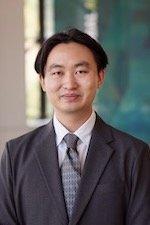
Youxin Feng obtained his Master’s and Ph.D. degrees in Management from Tohoku University, Japan. He continued his research as a postdoctoral researcher at the same faculty before joining NUCB in April 2026. His research focuses on the international practices of social enterprises in East Asia, particularly in China, Japan, and South Korea. Employing qualitative methods as primary inquiry approach, he examines a range of topics within the social enterprise sector, including institutionalization, ecosystem, intermediaries, management strategies, and sustainable development. His current work centers on community-based social enterprises, seeking to understand how these community hybrid organizations achieve sustainability through external empowerment and internal strategy-making.
Research Interests
Social Enterprises, International Comparison, Qualitative Method
Final Education
Ph.D. in Management, Tohoku University
Awards & Honours
- (2026) The Encouragement Award of the 24th Japan NPO Society Award. Sustainability of Community-based Social Enterprises in China and Japan: A Dual- perspective Strategy
- (2026) Excellent Research Award, MIRAI foundation, Tohoku University. Mirai Foundation, Tohoku University
- (2025) Excellent Presentation Award of the 26th Annual Conference of Japan Nonprofit Organization Research Association. Japan Nonprofit Organization Research Association
Academic Papers
- Youxin Feng (2025) Intermediaries as External Enablers in Community-based Social Enterprise: Case Studies in China and Japan. Social Enterprise Journal
- Youxin Feng (2025) Sustainability of Community-based Social Enterprises in China and Japan: A Dual-perspective Strategy. Tohoku University
- Youxin Feng (2024) Public trust in Chinese elder-care social enterprises: common awareness and diverse perspectives from key stakeholders. Humanities and Social Sciences Communications
Grants
- (2022) How Can Chinese Elder-care Social Enterprise Build and Sustain Public Trust?: A Case Study of Chinese Elder-care Social Enterprise. MIRAI Foundation, Tohoku University Primary Researcher
- (2022) Improve Chinese Social Enterprise Sustainability under the “Challenging Times”: A case study based on Dynamic Capabilities theory. Japan Science and Technology Agency (JST) Primary Researcher